Please
click here for Current Theosophical Events in Cardiff

Theosophy has no
dogma, no priesthood
or diploma elite and recognizes no spiritual head.
All ideas presented at meetings are for consideration.
Please click here for Current Theosophical Events in
Cardiff
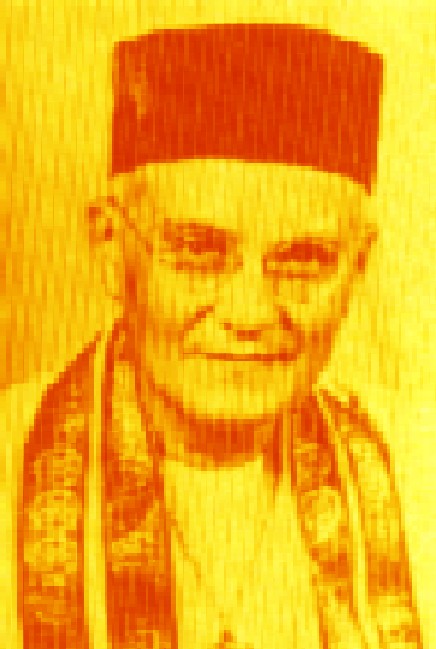
Adyar Theosophical
Society President
The Law of Renunciation
First
Published 1915
The joy of life! Is it
not everywhere? In plant and animal and man, do we not see an instinct for
happiness which impels all creation to rise from good to better, from better to
best? Since God said, “Let there be light!” are not all men seeking to step out
of darkness into light – blindly, dimly feeling that happiness must be their
goal? Yet how few find happiness in life! It is easy to sing:—
God’s in his heaven,
All’s right with the world!
But to sing so for long, one must be blind
to the facts. Life is a tragedy to many, and far more truly is it described by
Tennyson:—
Act first, this Earth, a stage so gloom’d
with woe
You all but sicken at the shifting scenes,
And yet be patient. Our Playwright may show
In some fifth Act what this wild Drama means.
Nevertheless all feel that happiness must be
the goal of life, and humanity never errs in its deepest feelings. But then why
should not the attainment of happiness be easier than it is ?
MAN AN EVOLVING SOUL
There is a philosophy of life which holds that man is an immortal soul,
living not one life on earth but many, growing through the experiences which he
gains in them manifold capacities and virtues. This philosophy further
postulates that all men are the children of One father, who has created a
universe, in order that working therein His children may know something
of Him, and come to Him in joy. According to this theory, the purpose of life
is not to achieve a stable condition of happiness for any individual, but
rather to train him to work in a Plan of an Ideal Future, and find in that work
an ever-changing and ever-growing contentment.
From the standpoint of the Theosophist, all men are indeed working for a
foreordained ideal future ; but they work at different stages, according to
their differing capacities. A recognition of these stages, and the laws of life
appropriate to each, makes life less the riddle that it is. There are three
broad stages on the Path of Bliss which leads to the Highest Good, and they are
happiness, renunciation, and transfiguration.
THE STAGE OF HAPPINESS
God calls upon all His children at this stage to co-operate with Him, by
offering them happiness as the aim of life. He has implanted in them a craving
for happiness, and He provides work for them which shall make them happy. Love
of wife and child and friend, fame and the gratitude of men, success and ease —
these are His rewards for them that serve Him. Many are the pleasant paths in
life for the young souls at this stage, to reap happinesses as they prove those
pleasures.
That
hills and valleys, dale and field,
And
all the craggy mountains yield.
Useful up to a point as men are in the Great Work at this stage, yet so long as
a man deliberately seeks happiness, his capabilities as a worker are
soon exhausted. For soon he “settles down in life” ; the precious gift of
wonder slowly fades away, and his happiness ceases to be dynamic. Self-centred,
he calls on the universe to give. But the Path to Bliss is by work, and if he
is to go ever on, he must fit himself for a larger work than has so far
fallen to his share. He must enter on the next stage, but for that he must
change utterly. Hither-to he has measured men and things by the standard of his
little self; henceforth the Great Self must be his measure. He must break the
sway of himself, and realize that evermore what is important in life is not he,
nor his happiness, but a Work. Before this realization can begin, there must be
a conversion.
CONVERSION
In many ways are men converted from the interests of the little self to
the work of the Great Self. Some, loving Truth in religious garb, open their
hearts to a Personality who dazzles their imagination. Thenceforth they must
serve Him, and be like Him, and gone forever is the standpoint of the little
self. Some study science and philosophy, and discover a magnificent plan of
evolution, with the inevitable result that they know that the individual is but
a unit in a great Whole, and not the centre of the cosmos. If they set to study
rightly, they see, too, that there is a Will at work, and that, cost what it
may, they must co-operate with that Will. A few there are to whom comes some
mysterious experience from the hidden side of things, and life speaks to them a
transforming message. Out of the invisible comes a “Saul, Saul, why persecutest
thou Me?” and a persecutor of Christians is changed into an Apostle of Christ.
Manifold are the ways of conversion, the same in all lands and in all faiths.
One factor is common : the old personality is disintegrated, and a new one is
reintegrated in the service of a Work.
When, through conversion, the new personality is ready for a larger work, the
tools which he uses must be made pure. They are his thoughts and feelings, and
slowly a process of purification is begun. Disappointment and pain and grief
are his lot – the sad harvest of a sowing of selfishness in the unseen past of
many lives, for we reap as we have sown. When the worker is ready, swift is Nature’s
response to free him from the burden of his past, in order that he may be fit
to achieve the great work which she has prepared for him.
THE MEANING OF PAIN
With some, sorrow hardens the character, but with those who are ready to
enter on the second stage, it ever purifies. Does not the very texture and the
flesh of a sufferer, who has in patience and resignation borne his pain, seem
luminous and pure, as though through every cell there gleamed the light of a
hidden fire? How much more so is it with mental suffering? Are we not
irresistibly drawn to reverence one who has suffered much and nobly, and
sometimes to love, too?
I saw my lady weep,
And Sorrow proud to be advanced so
In those fair eyes where all perfection keep.
Her face was full of woe: But such a woe (believe me) wins more hearts
Than Mirth can do with her enticing parts,
Sorrow was there made fair,
Passion wise ; tears a delightful thing;
Silence beyond all speech a wisdom rare.
She made her sighs to sing,
And all things with so sweet a sadness move
As made a heart at once both grieve and love.
THE STAGE
OF RENUNCIATION
Life seems full of
evil days to those who come to the end of the first stage, but its lesson is
clear. That lesson is, “Thou must go without, go without!” That is the everlasting
song, which every hour, all our life through, hoarsely sings to us. Truly does
Carlyle voice the wisdom of the ages when he says, “The Fraction of Life can be
increased in value not so much by increasing your numerator as by lessening
your denominator. Nay, unless my algebra deceive me, unit divided by a zero
will give infinity. Make thy claim of wages a zero then ; thou hast the world
under thy feet.”
THE LAW OF RENUNCIATION
All great workers know that the Law of renunciation is true, and that “it
is only with renunciation that life, properly speaking can be said to begin”.
There are no great souls who are completely happy, can ever be! Once more let
the great apostle of Work speak to us: “the happy man was never yet created;
the virtuous man, tho’ clothed in rags and sinking under pain, is the jewel of
the Earth, however I may doubt it, or deny it in bitterness of heart. O never
let me forget it! Teach me, tell me, when the Fiend of Suffering and the base
Spirit of the World are ready to prevail against me, and drive me from this
last stronghold.”
Take whom you will who has done a great work, and he knows that renunciation is
the law. In bitterness of heart Ruskin cries out : “I have had my heart broken
ages ago, when I was a boy, then mended, cracked, beaten in, kicked about old
corridors, and finally, I think, flattened fairly out”. But he persevered in
his work all the same. There is no greater name in the world of art than
Michael Angelo, “this masterful and stern, life-wearied and labor-hardened
man”, whose history “is one of indomitable will and almost superhuman energy,
yet of will that had hardly ever had its way, and of energy continually at war
with circumstance”. It is the same with all who have been great.
THE MEANING OF LIFE
But through renunciation the soul on the threshold of greatness
discover’s life's meaning. If religious, he will state it, “Thy will be done” ;
if scientific or artistic he will say, “Not I, but a Work”. He is now as Faust
who sought happiness in knowledge, and failed ; sought it in the love of
Marguerite, and reaped a tragedy ; and only as he planned to reclaim waste
lands for men, and lost himself in the dream of that work, found that
long-sought-for happy moment when he could say, “Ah, tarry a while, thou art so
fair!”
So, renouncing live the souls of the second stage, lovers of a Work. Sad at
heart they are; but if they are loyal to their work, then comes to them in
fleeting moments more than happiness ; it is the joy of creation. Such wonders
they now body forth that to themselves their masterpieces are enigmas. In
fitful gleams they see a Light, and know that now and then it shines through
them to the world. Perfect masters of technique they are now, in religion, in
art, in science, in every department of life. But alas! Just as they have
discovered what it is to live, what it is to create, they are old, and life
comes to a close, before it seems hardly begun. Shall the path of renunciation
bring nothing but despair?
Despair
was never yet so deep.
In
sinking as in seeming;
Despair
is hope just dropp’d asleep
For
better chance of dreaming.
THE STAGE
OF TRANSFIGURATION
“Hope just dropp’d
asleep for better chance of dreaming” – that, truly, is death. The great worker
leaves life but to return again, with every dream old and new nearer
realization. He returns, with the inborn mastery of technique of the genius, to
achieve now where once he only dreamed. The joy of creation is now his sure and
priceless possession, that wondrous joy which only those who know can offer all
gifts of heart and mind, and stand apart from them, while a Greater than they
creates through them. “Seeking nothing, he gains al ; foregoing self, the
universe grows I”. Now has he found that life which he lost in the stage of
renunciation ; henceforth, in all places and at all times is he become “a
pillar in the temple of my God, and he shall no more go out”.
THE PATH OF BLISS
So life gives of its best to all — happiness to some, renunciation to others,
and, to a few, transfiguration. What if now most of us, who love Truth, must
“do without”? Let us but dedicate heart and mind to a Work, and we shall find
that renunciation leads to transfiguration. There is but one road to God , for
all to tread. It is the Path of Bliss. It has steps — happiness, renunciation,
and transfiguration. Whoso will offer up all that he is to a Work, though he
“lose his life” thereby, yet shall he find it soon, and “come again rejoicing,
bringing his sheaves with him.”
History of the Theosophical Society
Cardiff, Wales, UK,
CF24 – 1DL
For more info on Theosophy
Try these

Cardiff Theosophical
Society meetings are informal
and there’s always a cup of tea afterwards
The Cardiff Theosophical Society Website
The National Wales Theosophy Wesbsite
Theosophy
Wales Youtube Channel
Ten Benefits of Studying the Blavatskyan
Theosophical Teachings
Studying
the Blavatskyan Theosophical teachings offers numerous benefits that can greatly
enrich one's understanding of spirituality, philosophy, and the nature of
reality. Theosophy, as defined by the
writings of Helena Petrovna Blavatsky, has had a profound impact on the
spiritual and philosophical landscape of the modern world. Blavatsky's
teachings draw from a wide range of religious and philosophical traditions,
including Hinduism, Buddhism, and Western esotericism, and present a
comprehensive worldview that addresses fundamental questions about existence,
consciousness, and the cosmos.
Here
are ten benefits of studying the Blavatskyan Theosophical Teachings
1.
Exploration of Esoteric Wisdom
One
of the primary benefits of studying the Blavatskyan Theosophical teachings is
the opportunity to explore esoteric wisdom that is often not readily accessible
in mainstream religious or philosophical traditions. Blavatsky's writings delve
into the esoteric teachings of ancient cultures and mystery schools, shedding
light on profound spiritual truths that have been passed down through the ages.
By delving into these esoteric teachings, students of Theosophy can gain
insights into the nature of consciousness, the structure of the cosmos, and the
evolution of the soul or immortal self.
2.
Synthesis of Eastern and Western Philosophy
Blavatsky's
Theosophical teachings synthesize elements of Eastern and Western philosophy,
offering a comprehensive framework that integrates concepts from diverse
cultural and religious traditions. This synthesis provides students with a
broader perspective on philosophical and spiritual thought, allowing them to
see the underlying unity of seemingly disparate belief systems. By studying
Theosophy, individuals can gain a deeper appreciation for the universal
principles that underlie all wisdom traditions, fostering a sense of unity and
interconnectedness with the world's spiritual heritage.
3.
Understanding of Universal Brotherhood
Central
to Blavatsky's Theosophical teachings is the principle of universal
brotherhood, which emphasizes the essential unity of all beings and the
interconnectedness of life. By studying Theosophy, individuals can develop a
profound understanding of the interconnected nature of existence, recognizing
that all living beings are fundamentally linked and that compassion and empathy
are essential for the evolution of humanity. This understanding can lead to a
greater sense of empathy, kindness, and social responsibility, fostering a more
harmonious and compassionate society.
4.
Insight into the Nature of Reality
The
Blavatskyan Theosophical teachings offer profound insights into the nature of
reality, consciousness, and the unseen dimensions of existence. Through the
study of Theosophy, individuals can explore concepts such as the
multi-dimensional nature of the universe, the existence of subtle energy
realms, and the interconnectedness of the material and spiritual planes. This
exploration can lead to a deeper understanding of the nature of reality beyond
the limitations of the physical senses, opening up new vistas of perception and
understanding.
5.
Personal Spiritual Growth
Studying
the Theosophical teachings can be a transformative journey that facilitates
personal spiritual growth and self-discovery. Blavatsky's writings offer
practical guidance for inner development, including meditation practices,
ethical principles, and the cultivation of spiritual virtues. By applying these
teachings to their lives, individuals can experience profound personal
transformation, leading to greater self-awareness, inner peace, and a sense of
purpose and meaning.
6.
Ethical and Moral Guidance
The
Theosophical teachings provide a comprehensive ethical and moral framework that
can guide individuals in their personal and social interactions. Blavatsky
emphasizes the importance of ethical conduct, altruism, and the pursuit of
wisdom, offering practical guidance for leading a virtuous and meaningful life.
By studying Theosophy, individuals can gain clarity on moral issues, cultivate
a sense of ethical responsibility, and contribute to the greater good of
humanity.
7.
Appreciation of Comparative Religion
The
study of Theosophy encourages an appreciation of comparative religion and the
underlying unity of religious and spiritual traditions. Blavatsky's writings
explore the common threads that run through the world's religions, highlighting
universal spiritual principles that transcend cultural and historical
boundaries. By gaining a deeper understanding of comparative religion through
Theosophy, individuals can develop a more inclusive and pluralistic
perspective, fostering interfaith harmony and mutual respect.
8.
Intellectual Stimulation
The
Theosophical teachings offer a rich and intellectually stimulating framework
for exploring profound philosophical and metaphysical concepts. Blavatsky's writings
encompass a wide range of subjects, including cosmology, metaphysics, ancient
wisdom, and the evolution of consciousness, providing ample material for
intellectual inquiry and contemplation. By engaging with these teachings,
individuals can expand their intellectual horizons, develop critical thinking
skills, and gain a deeper understanding of the fundamental questions that have
intrigued philosophers and mystics throughout history.
9.
Healing and Reconciliation
The
Theosophical teachings offer insights into the nature of healing and
reconciliation, both on a personal and collective level. Blavatsky's writings
delve into the esoteric principles of healing, the nature of disease, and the
interconnectedness of mind, body, and spirit. By studying Theosophy,
individuals can gain a deeper understanding of holistic healing modalities, the
power of the mind in influencing health, and the potential for spiritual
transformation through the healing process. Furthermore, the Theosophical
emphasis on universal brotherhood and compassion can contribute to the
reconciliation of divisions and conflicts within society, fostering a more
harmonious and peaceful world.
10.
Contribution to Global Transformation
Finally,
studying the Blavatskyan Theosophical teachings can empower individuals to
contribute to the ongoing global transformation towards a more enlightened and
compassionate world. Blavatsky's vision of a spiritually awakened humanity,
working towards the betterment of all beings, inspires individuals to engage in
positive action and service to humanity. By embodying the principles of
Theosophy in their lives, individuals can become agents of positive change,
working towards the realization of a more just, peaceful, and sustainable
world.
In
summary, the study of the Blavatskyan Theosophical teachings offers a wide
range of benefits, ranging from personal spiritual growth to the potential for
global transformation. By delving into the esoteric wisdom, ethical principles,
and philosophical insights of Theosophy, individuals can expand their
understanding of the nature of reality, cultivate compassion and empathy, and
contribute to the evolution of humanity towards a more harmonious and
enlightened future. As the Theosophical teachings continue to inspire and guide
seekers of truth and wisdom, their profound impact on individuals and society
is likely to endure for generations to come.
Dave’s Streetwise Theosophy Boards
If
you run a Theosophy Study Group then please
Feel
free to use any material on this Website
This is for everybody not just people in Wales
Theosophy Cardiff’s Instant Guide to Theosophy
One Liners & Quick Explanations
The main criteria
for the inclusion of
links on this
site is that they have some
relationship
(however tenuous) to Theosophy
and are
lightweight, amusing or entertaining.
Topics include
Quantum Theory and Socks,
Dick Dastardly and Legendary Blues Singers.
No
Aardvarks were harmed in the
History of the Theosophical Society
General pages
about Wales, Welsh History
and The History
of Theosophy in Wales
Her Teachers Morya & Koot Hoomi
The Most Basic Theosophy Website in the Universe
If you run a
Theosophy Study Group you can use
this as an
introductory handout
Lentil burgers, a
thousand press ups before breakfast and
the daily 25 mile
run may put it off for a while but death
seems to get most
of us in the end. We are pleased to
present for your
consideration, a definitive work on the
subject by a
Student of Katherine Tingley entitled
Theosophy and the Number Seven
A selection of articles relating to the esoteric
significance of the Number 7 in Theosophy
The Spiritual Home of Urban Theosophy
The Earth Base for Evolutionary Theosophy
What Theosophy Is
From the Absolute to Man
The Formation of a Solar System The Evolution of Life
The Constitution of Man After Death
Reincarnation
The Purpose of Life
The Planetary Chains
The Result of Theosophical Study
An Outstanding
Introduction to Theosophy
By a student of
Katherine Tingley
Elementary Theosophy Who is the Man? Body and Soul
Body, Soul and Spirit Reincarnation Karma
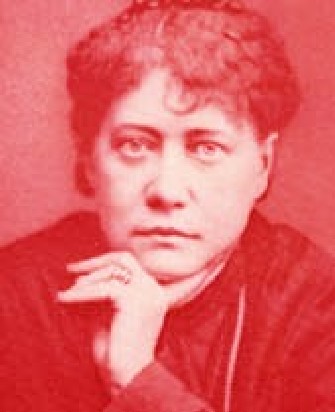
Helena
Petrovna Blavatsky (1831 – 1891)
The
Founder of Modern Theosophy
Is the Desire to Live Selfish?
Ancient Magic in Modern Science
Babel Of Modern Thought
Precepts Compiled by H P Blavatsky
Obras
Por H P Blavatsky
En
Espanol
Articles
about the Life of H P Blavatsky
H P Blavatsky
the Light-Bringer
by
Geoffrey A Barborka
The Blavatsky Lecture of 1970
Try these if you are looking for a
local Theosophy
Group or Centre
UK Listing of Theosophical Groups
Worldwide Directory of Theosophical Links
General pages
about Wales, Welsh History
and The History
of Theosophy in Wales
Wales is a
Principality within the United Kingdom
and has an eastern
border with England.
The land area is
just over 8,000 square miles.
Snowdon in North
Wales is the highest mountain at 3,650 feet.
The coastline is
almost 750 miles long.
The population of Wales as at the 2001 census is 2,946,200.
#theosophy_headquarters
#theosophical events #theosophy_cardiff
#theosophy_wales #national_wales_theosophy
#blavatsky #olcott #judge #secret_doctrine
#isis_unveiled